Office hours: Mon - Fri 09:00 - 17:30 (Sat closed during Nov/Dec 2026)
Office hours: Mon - Fri 09:00 - 17:30 (Sat closed during Nov/Dec 2026)
Office hours: East Coast USA: Mon - Fri 09:00 - 17:30 (04:00 - 12:30 local time) (Sat closed during Nov/Dec 2026)
West Coast USA: Mon - Fri 09:00 -17:30 (01:00 - 09:30 local time); Sat 09:30 - 13:00 (01:30 - 05:00)
Office hours: Ottawa: Mon - Fri 09:00 - 17:30 (04:00 - 12:30 local time) (Sat closed during Nov/Dec 2026)
Vancouver: Mon - Fri 09:00 - 17:30 (01:00 - 09:30 local time); Sat 09:30 - 13:00 (01:30 - 05:00)
Office hours: Canberra: Mon - Fri 09:00 - 17:30 (20:00 - 04:30 local time) (Sat closed during Nov/Dec 2026)
Office hours: Mon - Fri 09:00 - 17:30 (22:00 - 06:30 local time) (Sat closed during Nov/Dec 2026)
Office hours: Mon - Fri 09:00 - 17:30 (check internet for local time equivalent) (Sat closed during Nov/Dec 2026)
Through green Cantabrian hills to the Picos de Europa
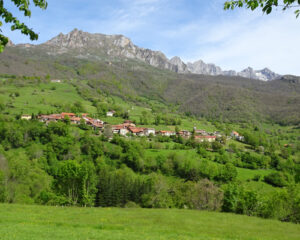
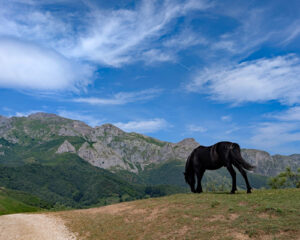
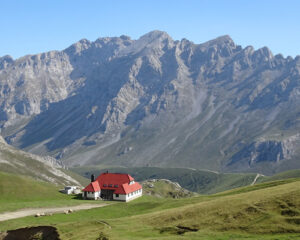
The spectacular skyline of the Picos de Europa region of northern Spain has held a special draw for centuries, signalling to sailors that they were nearly home, and now beckoning hikers from around the world. Our route here maintains this sense of anticipation, starting in the green foothills to the east and journeying westwards to the higher wilderness.
First you’ll become acquainted with the quiet farm tracks scattered across the valleys of Polaciones and Liébana. Vultures and eagles soar overhead whilst Cantabrian brown bears and Iberian wolves keep their distance in the undisturbed hills away from your path. Stop at tiny villages to stay in wayside inns and small hotels where you can enjoy a glass of orujo (the local firewater) with your hosts and sample the hearty Lebaniego stew.
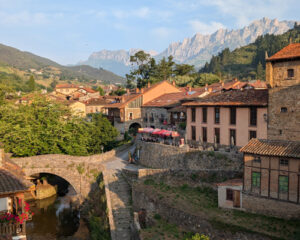
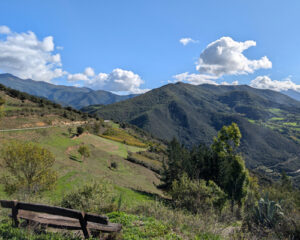
After the bustling little town of Potes, follow the final section of the Camino Lebaniego pilgrimage route to the monastery of Santo Toribio. The modest buildings here belie its status as one of the most important pilgrim sites in Europe, with attendant hermitages perched on vantage points in the surrounding hills.
Now the landscape becomes more rugged, and the trail brings you to the massive cliffs at Espinama and Fuente Dé. Below the soaring peaks you have a choice of routes, but if the weather is good you should scale the cliffs by cable-car and experience a different world of bare rock and alpine pastures. The best views are yet to come on a glorious descent across the wooded hillsides back to your celebratory dinner and the end of your great Cantabrian traverse.
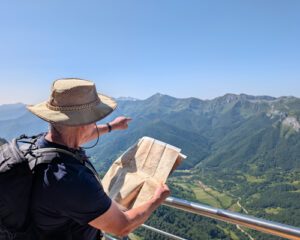
This route has been created especially for On Foot Holidays by Aznar Fernandez de Pinedo, designer of several of our Spanish hikes. He says: “When creating this route I wanted to avoid the popular trails in the mountains that have become overcrowded. My route visits totally off-the-beaten-track valleys and towns that no other tour operators have considered.
“It is a great ‘Crossing of Green Spain’ to reach the magnificent Picos. It skips the uneven paths at high elevation where the weather is unpredictable, and instead goes along scenic trails that are easier underfoot, but all the time through extremely beautiful scenery.”
See our webpage for all the details, or call us to speak to Simon, who has walked the route and will be happy to tell you about its unique character.
Find more holidays in Spain here
We’ve always considered that a good meal at the end of the day is crucial to making a walking holiday into a great walking holiday. It’s so much more than just fuel – it’s an experience in itself, and a celebration of what you’ve achieved during the day.
We and our hedonistic walkers spend a lot of time hunting out the best places to eat, only occasionally encountering a dud along the way… The search is much easier in places known for their fabulous food, and we can recommend Catalonia to you with added authority, as it was officially World Region of Gastronomy in 2025. This recognition brings into focus the wonderful local produce and cooking of the northeast corner of Spain – see more here.


While hiking our Catalonia: El Priorat route there are lots of typical Catalan dishes to look out for, all making the most of the first-class ingredients produced in these landscapes. You’ll find lots of pork, and also plenty of grilled vegetables, garlic and ground nuts. Botifarra is a pork sausage that appears in many different varieties, and typical sauces include picada, a basic combination of almond, bread and liquid that can be flavoured with garlic, saffron or parsley. You might finish your meal with crema catalana, a sweet custard that is also found in pastries.
And, of course, in the Priorat region there’s a multitude of excellent wines to pair with the freshest seasonal cuisine. Make time for a wine tasting at Clos Figueras, our accommodation in Gratallops, followed by an excellent meal in their Slate Wine Bar, or add a bespoke wine tour with our local contact, Joanna.


The Wine Fair (Fira de Vi) in the town of Falset, your final destination, is a fun way to find out more about local wines – take a look at what’s on if you are visiting in May (some events require advance booking). Falset is also planning a new Food & Wine Inspiration Centre, which we hope walkers will be able to visit next year!
If you’d like to push the boat out a little bit one evening, you could consider the Michelin-starred restaurant Quatre Molins in Cornudella where you’ll find influences from French and Asian cuisines as well as the best local ingredients.
Whatever gastronomic delights you discover in Catalonia, you’re sure to come away enthused by the wonderful flavours of this very special part of Spain.
Find more about On Foot’s route in Catalonia here
See more walking routes in Spain
When designing the On Foot Holidays routes, we always try to bring you to a destination that is really worth the effort – usually a delightful town or small city. They’re places to stop for a while and celebrate your achievements, maybe spending an extra night or two to explore what these lovely places have to offer.


The romantic fishing port of Camogli (Ligurian Hills) was described by Charles Dickens as “the saltiest, most piratical town” on the Mediterranean. Now more welcoming of visitors, it’s a place to relax by the sea and visit the maritime museum or the nearby villages of Portofino and San Fruttuoso.
Situated at the mouth of the River Dart, the historic seaside town of Dartmouth (Devon) is a favourite with sailors, but has plenty of other things to do. Take a steam train ride, visit the ancient castle, discover the town’s naval history, or just stroll the cobbled streets and pop into the many enticing shops and galleries.
With over twenty bookshops, it’s no surprise that Hay-on-Wye (Welsh Borders) is called the ‘town of books’. It’s also home to an internationally renowned literary festival. Maybe ask Sarah, our local contact, about taking a guided walk, or simply kick your boots off, grab a book and relax.

Your Andalucia itinerary allows an extra day to explore the clifftop town of Ronda, with its incredible views and many historic buildings that are a blend of Moorish and Spanish influences. Walk across the extraordinary bridge, nearly 100m above the gorge, and watch the birds soaring around the cliffs.
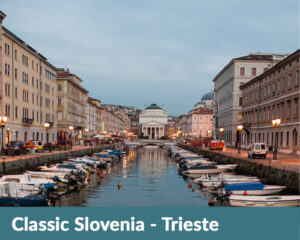
The final day of the Classic Slovenia walk brings you into Italy and the city of Trieste – a beautiful multicultural port with stunning buildings, hospitable locals, and fascinating museums. And if you want more of Slovenia, you can take a ferry to medieval Piran on Slovenia’s tiny 47km coastline.